Tokyo 2020 Olympics costs estimated to increase by 22%, as a result of the pandemic

Students from the University of Oxford study the cost of Olympic games and the outcome of the pandemic. Estimated 22% increase to the initial amount addressed by the Tokyo committee.

(credit: AFP via Getty Images)

Due to the coronavirus pandemic the 2020 Tokyo Olympics had been postponed for a year, now to take place on the 23rd July 2021, followed by the Paralympic on august 24th.

As a result of this the estimated cost of the games £9.4bn has increased by 22% to £11.5bn.

The extra £2.1bn has come from the delay to the games because of the virus and added expenses from renewing contracts additions measure relating to Covid-19.

The Tokyo Olympics have recorded as the most expensive summer games and expected to increase as it gets close to the games.

This prediction was made by a study from the University of Oxford in Britain before the pandemic hit in March 2020.

In the Study it says; “Every Olympic since 1960 has run over budget, at an average of 172% in real terms, the highest overrun on record for any type of megaproject…for the first time, that coat and cost overrun for the Games follow a power-law distributions.”

(B. Flyvbjerg, A. Budzier, D. Lunn 2020)

According to Oxford the London Olympics was the most expensive games at £10.6bn but with the games due to take place in 2021 Tokyo is expected to exceed this amount.

In 2013 when the International Olympic committee (IOC) announced Tokyo won the bid to host the games, they only predicted a cost of £5.2bn.

The Japanese government has revived £5bn from a privately funded operation, however, is still responsible for the rest of the costs.

There has been a reduction to the cost according to the organisers in October. £209m reduction by removing hospitality offerings.

However there has been a full commitment to the sports program. With the hopes of sponsors, 11,000 athletes, over several hundreds of thousands of official and judges.

City of Birmingham gymnast hasn’t given up on the Olympics

Due to the Coronaivirus British Gymnastics made the conscious decision to cancel all national competitions, including Olympic qualifying.

2018 Gymnastics British Championships
(March 10, 2018 – Source: Laurence Griffiths/Getty Images Europe)

Along side the championships being cancelled the Olympic games was also postponed until 2021, for 15 year old Taeja James, this wasn’t completely bad news.

“I was uncertain as to what was going to happen for selection and i believe some people had already been chosen for the games,” said Taeja

However this didn’t mean she was completely out of the running.

After battling several injuries over the years, Taeja felt like have another year for preparation for the games was a good thing.

Olympic trials have been scheduled to happen next year, but the date is yet to be released by British Gymnastics.

In the mean time, Taeja has been completing home training during the lock down, as there is still an uncertainty as to what will happen for the next competitive season.

its important to her to keep her fitness up and continue to train as she dose not know if she will be going to the Olympics and she needs to be ready for whats to come.

“I was gutted when i found out that British was cancelled, but theirs’ plenty more for me in the future.”

Once Taeja and her coach is familiar with the new policies that British Gymnast put in place, they will come up with a plan to better her chances of getting selected.

She was part of the on the Gymnastic Worlds team and helped the women’s artistic team that finished 6th place in the team final of the 2019 Artistic Gymnastics World Championships in Stuttgart, Germany, this also meant the team has qualified for the Olympics.

After the announcement of the championships. British Gymnastics said;

“We can then begin to make more long-term plans for our Olympic Programmes and support our gymnasts to enable them to come back even stronger. We look forward to them being able to deliver amazing performances”

British Gymnast also agrees with the decision to postpone the Olympic games and will work with the Federation International Gymnastique (FIG) looking at the new Olympic programmes and qualification system.

Olympic games 2020 postponed because of corona virus

The International Olympic Committee (IOC) and the Tokyo organising committee have made the cautious decision to suspend the Olympic games until 2021.

This image has an empty alt attribute; its file name is blue-81847_640-1.jpg (CREDIT: Pixabay, PublicDomainPictures)
Due to the rapid increase and distribution of the Corona virus (Covid- 19) Japanese prime minster Abe Shinzo and President of the IOC Thomas Bach had a conference call Tuesday morning.

This resulted in the joint decision to pospone the games until summer 2021.

The IOC President Thomas Bach produced a press release ask for patience and to ensure all athletes that the games will happen.

“You can be sure that you can make your Olympic dream come true” he said to athlete.

They made the decision to postpone the games because they cared of the wellbeing and safety of the athletes and everyone involved.

Batch went on to say he didn’t want people to loose hope due to the uncertainty of the virus and not knowing how long it will remain.

“we wont the Olympic flame to be the light at the end of the tunnel, the games can be a celebration of determination and demonstration of the Olympic spirit that unites us all.”

This is what Britain’s Olympic hopeful Sky Brown had to say about the news.

But its not all deverstation for City Of Birmingham gymnast and Commonwealth Games (Team England) team silver medallist Taeja James.

Since the news this has given her a second chance to qualify and prepare for Tokyo 2021.

British Gymnastics have made the decision to hold Olympic trials next year

With the Covid-19 training has put a stop to training, but hasn’t effected many Olympic dreams.

This is what some other athletes had to say about the announcement on twitter:

  • “Today we are all struggling with a much bigger problem and although August still seems far away, the security for such a big event was very difficult. See you in 2021,” Italian track cycling champion Elia Viviani wrote on Twitter.
  • British heptathlon world champion Katarina Johnson-Thompson said on Twitter: “I feel under pressure to train and keep the same routine which is impossible.”
  • USA track Olympian Lolo Jones had this to say on twitter “I’m so happy the Olympics was postponed. I was vocal for so many days. I’ve had so many calls with athletes who have been in tears trying to train for their ultimate dream but not wanting to jeopardize their health. This was the right thing to do. May the world heal”

BCU sports scholar supports NHS through lockdown

Birmingham City University sports scholar finds a way to break through the lockdown and support the NHS.

This image has an empty alt attribute; its file name is IMG_20201119_184602_968.jpg
Credit: Jessie Lutwyche

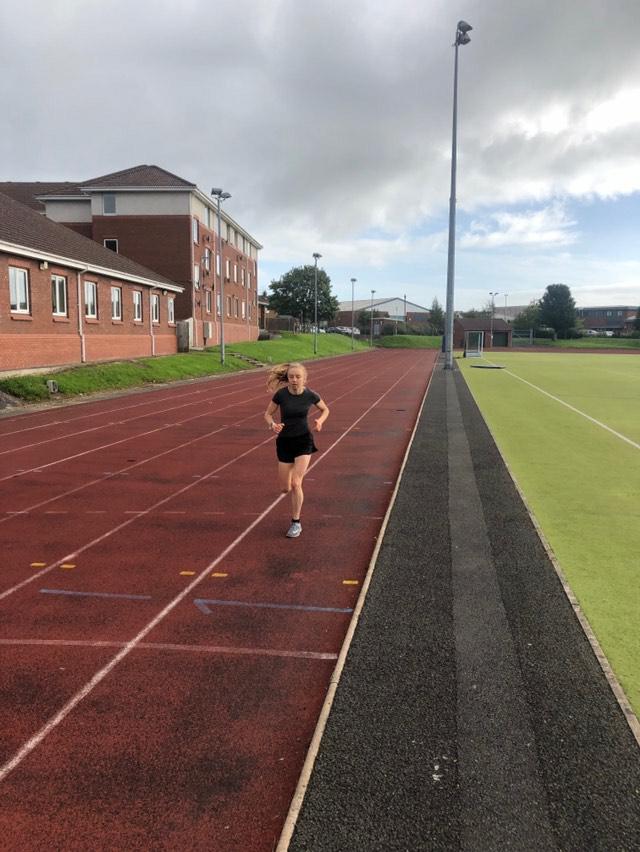
The first lockdown was a huge disturbance to 22-year-old student nurse Jessie Lutwyche plans and goals for the year.

After previously competing in 10k, half marathon, marathon and cross country, she had put herself in great position ranked third in the UK as an U23 athlete.

With cancelations of all competitions she had to adapt to the new surroundings.

“I was unable to undertake my strength and conditioning sessions, so I made my own home gym… I learned to become more self motivated and disciplined, ” She said in response to the question on what she gained from the first lockdown.

Going forwards to todays lockdown Jessie knew she would have to make changes again but also took what she learned from the last.

Not only does she need to balance training but now education.

Jessie said; “I have learnt that its ok to feel slightly demotivated some days this is natural, however its important to think into the future and focus on small gains and personal progress.”

As an athlete training at the moment is all about maintenance and prevention of any injuries.

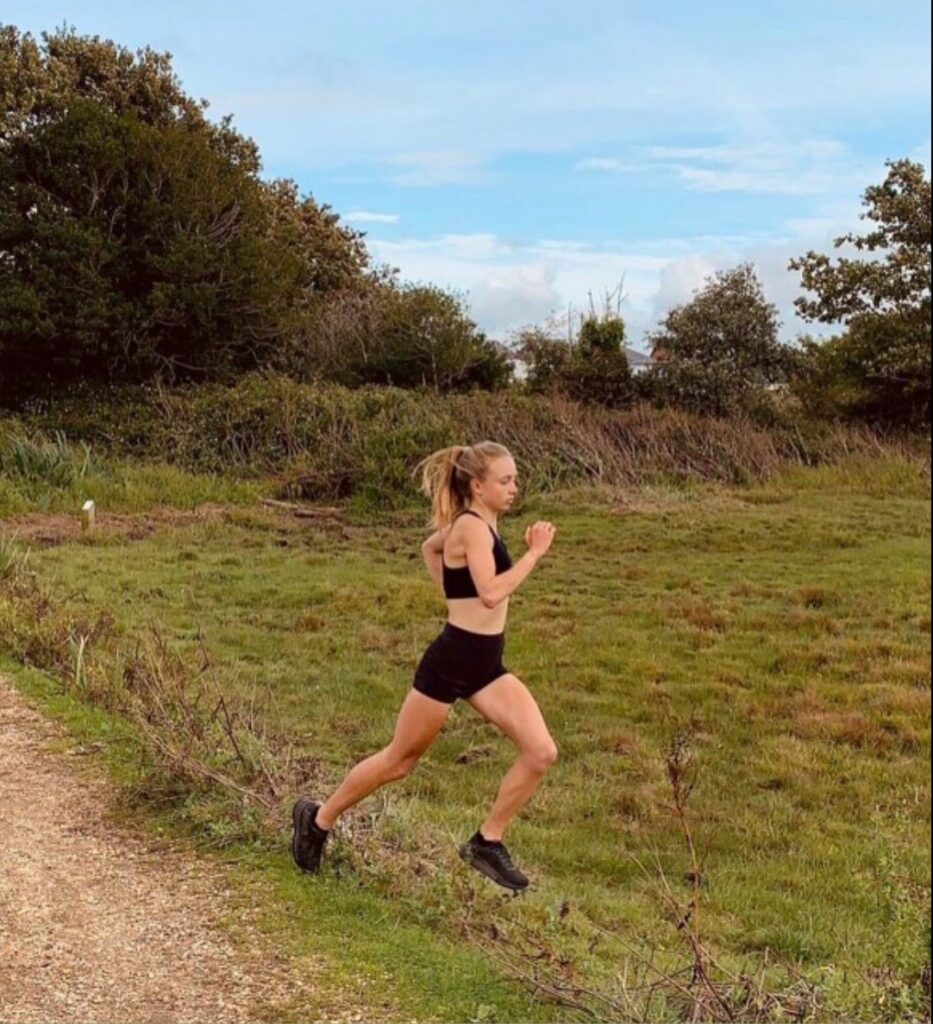
This image has an empty alt attribute; its file name is Screenshot_20201119-184534_Instagram-e1606400555395-933x1024.jpg

Jessie and her coach has come up with eight week cycle blocks for training, to help keep her fit and healthy but also prepared for any competition in the future.

Working in the NHS can be daunting and being away from family, Jessie expressed the importance of community and a routine.

To conclude Jessie said; ” its natural to be worried about taking anything home to my family, but i feel that as a student nurse it sis part of my duty to help out in anyway I can and relive the burden off other nurses.”

Black History Month: Remembering Cyrille Regis MBE

Cyrille Regis was a member of the so-called “Three Degrees” and a face that helped changed British football.

This image has an empty alt attribute; its file name is 1_oYICxRKxhs-Ry9oV5RwJjQ.jpeg
Credit: West Bromwich Albion
Laurie Cunningham, Cyrille Regis and Brendon Batson “Three Degrees”

In the 1970’s West Bromwich Albion made the bold decision to sign three black players: Laurie Cunningham, Brendon Batson and Cyrille Regis.

This was unusual in British football and many fans were happy about it. However the manager at the time, Ron Atkinson, gave the trio the name that would never be forgotten, ‘The Three Degrees’ after the popular US pop group.

Cyrille Regis and his team mates faced many challenges. Fans would shout monkey chats and throw bananas at them. Sadly, this became the norm in the late 70’s.

Despite what was going on around them, the three players let their skills do the talking for them. The team started to flourish.

With an increase in media and technology the men use this to their advantage. The three men worked together to fight against prejudice and racism.

This image has an empty alt attribute; its file name is nintchdbpict000001056071.jpg
Credit: Getty – Contributor

Regis then went on to be the third black footballer to play for England, six appearances as an under 21, and five appearances in the senior team.

Also being one of the first black British players in a World Cup team.

His huge achievements mean he will never be forgotten for what he did for the young black men of today and many more to come.

Black History Month: Reflecting on Denise Lewis twenty years on

Twenty years ago, history was made at the 2000 Sydney Olympics. Here, we remember Denise Lewis’ historical Gold medal in the women’s heptathlon.

This image has an empty alt attribute; its file name is LewisSydney-1024x512.jpg
Credit: British Athletics

Birchfield Harriers athlete Denise Lewis OBE, 48, was not only the first British gold medallist, but the first British heptathlete to win medals in two consecutive Olympics and the first European athlete to win the heptathlon at an Olympic Games.

She was one of the favourites going into the games – Britain’s “Golden Girl”. But, it wasn’t an easy win for Denise.

Prior to the games, she had been facing many injuries and was uncertain of what the outcome would be.

After day one of the competition she was in third place and had to fight hard through out day two.

It came down to the 800m.

“When I had crossed the line, my first emotion was relief. I had given everything I could possibly give, and if it wasn’t going to be enough then it was my destiny”.

Denise Lewis, BBC Sport

She was crowned the Olympic Champion and a moment in sporting history was made.

Since the Olympic Games, Denise has gone on to be a BBC Sport presenter and appointed President of Commonwealth Games England.

British Gymnastics do what they can to keep the interest alive during lock-down

This image has an empty alt attribute; its file name is Logos_BG_LOGO_RGB_Hi.jpg
Credit: British gymnastics (National Governing Body)

All gymnastics competition and training sessions have been cancelled and stopped because of the Coronavirus, but the Young Leaders, member of the Leadership Academy programme still manage to still work and complete tasks from home.

British gymnastics wants to keep the young athletes involved in the sport during the lock down. By trying to get as many new gymnasts involved in the Leadership Academy programme.

Commonwealth Games silver medallist Teaja James said: “I was gutted when I found out that British was cancelled this year… but I understand that Olympic trials are to happen next year.”

The programme is aimed at a British Gymnast members of all levels ages 11-17

Chiara Querci, Volunteer Officer said: “The Leadership Academy is not only to support the development of the young leaders within our sport, but also ensures sustainability for the future of our clubs, allowing them to grow and mentor their workforce from within.”

More than 500 clubs are currently involved, with 4,000 plus young leaders taking part in the programme.

Normally the participants would be be working in their club with sessions delivered by their coaches, mentors and leadership academy captains. with additional work to complete at home.

However as a result of the current lock down, the leaders have been working hard and still aiming towards the goals from home and completing workshops and courses at home.

During the programme the young leaders are thought five different topic areas: my Learning, my development, my volunteering, my future and my projects. Each topic area has three achievement level which involve a range of activities.

“Leadership Academy is to support the personal development of young gymnasts at the typical drop off age in the sport. Leaders have gained invaluable experience through the programme in their gymnastics environment, enhancing their skills and knowledge of different career paths within gymnastics and volunteering their time both within their clubs and at events,” said Chiara.

Any British gymnastics clubs wishing to challenge themselves and connect with the sport in a different way, can sign up here.

BCU student hockey tournaments cancelled due to coronavirus

This image has an empty alt attribute; its file name is IMG-20200424-WA00011-1024x768.jpg
Birmingham University Women’s Hockey Team 2019/20
Amelia Keevil, member on the floor

Sport isn’t just about the physical attribute but also has a huge impact on mental health.


Amelia Keevil, 20, was one BCU’s Womens hockey members to be selected to represent the university at a 7-a-side tournament in Blackpool.


The hockey teams’s season was brought to an abrupt end due to the Covid-19 outbreak, meaning the trip to Blackpool was cancelled.


” I was pretty gutted, when you put all your hard work into university, competing will be my rearward afterwards. And now i feel like there is no reward and nothing to look forward too.” She said in response to the event being cancelled.

The four day tournaments in Blackpool was due to be played during the Easter weekend.


From going training four times a week and having weekly matches, she has realised the importance of physical activity and how much she misses her hockey family.


The whole team has been affected by the outbreak, especially her teammates who will be graduating this summer.


So their final competitive season has been brought to an end sooner they they would like.


During lock-down Amelia has been able to get active. But she expressed it doesn’t feel like it’s the same as being with teammates.


She has said the team have had a few Zoom meetings and FaceTime convocations to keep in contact with each other.


Going into university Amelia didn’t have any interests in joining a society.


During her first year of university she found it hard to make friends outside the classroom.


A lot of time was spent at home and to avoid becoming depressed, she made the decision to join the hockey team as it is something she has loved since school.


Amelia stated, “When you go home you have your parents to speak to but when you are at university your team is your family, and you go through so much together.”

She is currently in her second year at BCU studying Criminology with security studies.


Her advice to others, that are in similar conditions having to deal with assignments and exams is to:

  • stick to a programme, knowing what you want to do everyday.
  • write a check list
  • reflect on the day and look at positives

“I have two jobs just so I am kitted up, so I have good running trainers and spikes. And pay everything to do with sports.” Said Sandra Dike

22, year old Sandra Dike is an athlete that has two part time jobs just so she can train three to four times a week, with work being unbalance she feels isolated.

£2000 spent a year alone just on sports, this is towards memberships, competitions, track pass, travel/transport, accommodation and kit.

Sandra believes she will never be successful in the sport of athletics and its all for fun but also a good way for stress relief, “there will be days where I’m really angry and I just go to the track and I feel a lot better,” She said.

“I live on my own, pay my own bills, sports it’s just makes sure I’m just keeping fit.”

Sandra works Monday to Friday working back to back, morning shift as a receptionist at a gym and her second job a sales assistant at JD Sports.

Her work schedule isn’t consistent, so if she can’t make training at the track, she finds herself training alone most times having 1:1 session but without the rest of her group.

Or she has put her own programme together for those days she isn’t at the track training she will be in the gym.

Even though she has a track pass, the track isn’t available to use in the morning, so she finds herself training at a park with her coach.

“you get different type of people, some like to work with a group and some that don’t mind to work individually. I am both,” said Sandra.

Being around people helps her push herself and also being on different surfaces, the whole training environment is different.

Due to financial reasons Sandra has to work and maintain bills and tailor her lifestyle around sports. This also limits her social life, so by doing sports helps her feel more involved in the community.

“last seasons handing my finances was easier, because I lived with my family and I only had one job with a consistent timetable, “I do both jobs to have that extra income even if I don’t need the money”

Because of this Sandra believes work like can get in the way of sport, she is lucky she has a god coach behind her that is supportive and able to adapt to he, but she believes things need to change so more people are physically active.

Sport England needs to focus on Medals

Sport England puts all its money into grassroots and development but forgets about the older athletes and female athletes.

Sport England is an organisation created in 1997, which focuses on increasing participation in all levels of the sport development continuum, working with UK Sport and NGB’s.

They do this by helping people and communities get sporting habits from a young age and foe life, no matter age, ability, background, religion, gender, disability, and mental health.

Sport England runs a range of organisations, This Girl Can, Sainsbury’s School Games, Sportive, all targeting different areas of participation levels and offering a range of sports involving football heavily as it one of the most popular sports.

Their aims and objectives are to, protect existing facilities and enhance quality, accessibility and management of facilities.

But, to also provide new facilities to meet new demands and enhance the spot overall to make it more attractive.

I believe, that This Girl Can dose enough to get women involved in sports, however they don’t help out with any funding or finances. They put on all these clubs and events for women to get involved, but they aren’t free and this is something that isn’t explained in advertisement. So, they aren’t giving women the full opportunity to get physically active.

All funding come from the national lottery, 18.9mil goes towards NGB’s from 2017-2021 to go toward grassroots and development.

£300-£10,000 is put into different organisations and programmes to get people into sports and becoming more active.

However, because the money goes into organisations and put towards building facilities or equipment, the money isn’t seen by individuals. This means in a way it isn’t benefiting athletes that don’t need support with training, when the issue is paying for it.

Because the funding goes towards grassroots and development it means those that go professional or involved in individual sports funding themselves become harder and there a decrease in participation.

In terms of Women’s participation in sport there has been an increase due to the organisations partnership with This Girl Can

Football

Sport England focuses on grassroots level football and wanting to train the next generation. It has a partnership with St George’s Park by developing its elite and community football by bringing it all to one place.

By letting the grassroots earn and train at St George’s Park it means everyone get the experience of using elite equipment and getting the best sporting experience.

This also means enhancing football coaches and increasing the number of football coaches at different levels.

St Georges Park is a place where training to be a coach. By having better coaches and more will increase participation and performance. The put £3 million pounds of their money towards setting up St George’s Park.

Football is a male dominate sport and only the best get the opportunity to go there, what about the development of England Netball and the women are bringing home medals.

I believe Sport England should look into sports that aren’t as developed, that are just struggling at grassroots level and look to improve their facilities and involvement.

Instead of looking for medals and results they should investigate people’s lifestyle and well-being and what they can do for the people and not medal tables.

If it is about results, then think about the sports where medals are made at world cups and the Olympic games and not with popularity.

The argument is, should money be pumped into sports that gets the most attention or where results are being made and medals won?